

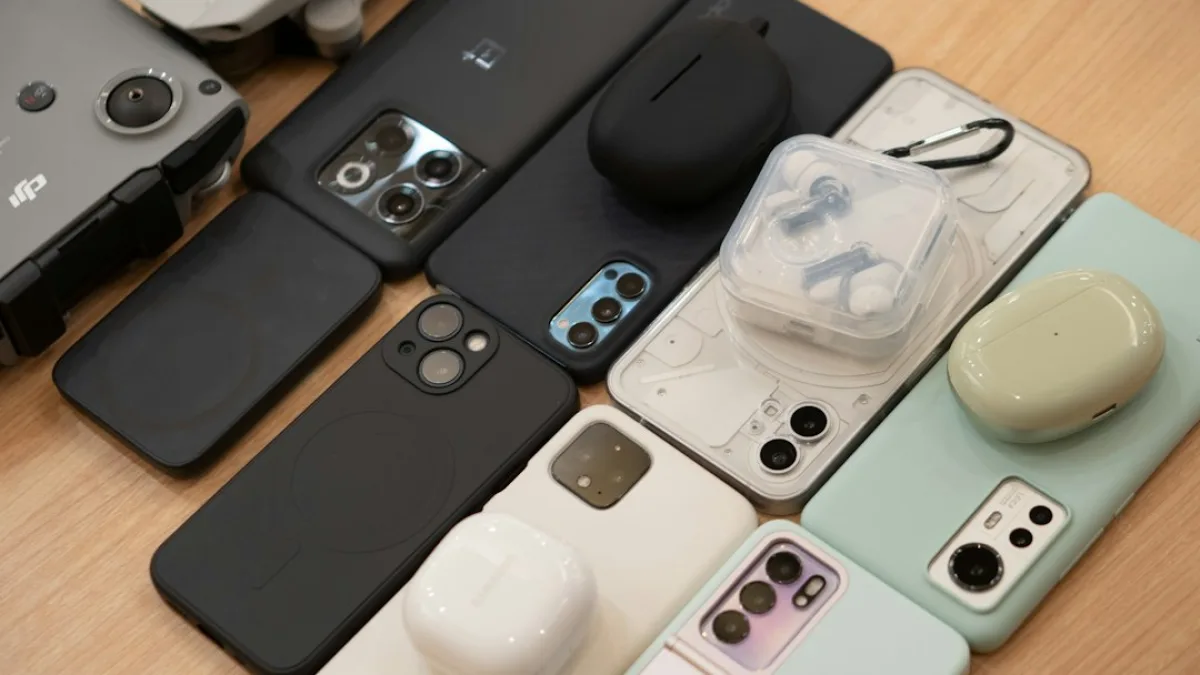
Most first-time accessory sellers blow the budget on stock depth before testing a single line. That mistake ties up cash in models nobody asks for and leaves you short when a real order lands. With roughly KSh 100,000, you can start a phone accessories business in Kenya, but the money must move in order: test demand first, verify suppliers, then buy depth on the few lines that actually sell.
Can you start a phone accessories business in Kenya with KSh 100,000?
Yes. KSh 100,000 is enough to launch a lean accessories operation if you keep rent low, test a narrow product range, and avoid tying up cash in slow-moving stock. The risk is not the amount; it is buying too many models of the same item before you know what your buyers want.
Why phone accessories suit a small first-time retailer
Phone accessories work for small capital because the units are light, cheap to deliver, and easy to replace. A customer who breaks a screen protector on Tuesday often buys again on Friday.
The category also fits mobile-first selling. Buyers already browse on their phones, so a shareable product link or catalogue is a natural way to close a sale without a physical shop.
The catch is competition. Accessories are everywhere, from supermarket shelves to roadside stalls, so your edge comes from reliability and clear pricing rather than novelty.
How to start phone accessories business in Kenya with KSh 100,000
- Register the business. Reserve a business name through the Business Registration Service so you can open a proper till and invoice customers.
- Set up tax basics. Get a KRA PIN and keep simple records from day one. The Kenya Revenue Authority publishes the current obligations for small traders.
- Choose one sales channel first. A stall, a WhatsApp catalogue, or a shop link. Running all three from day one spreads you thin.
- Buy a test batch, not a full range. Pick five to eight fast-moving items and buy small quantities of each.
- Set up a payment path. Register an M-Pesa till or paybill so buyers can pay instantly. Safaricom's M-Pesa covers the merchant options available.
- Track what sells. Note which items move weekly and reorder only those.
A realistic KSh 100,000 split
Treat these as planning examples, not fixed prices. Actual costs depend on your supplier, location, and whether you sell online or from a stall.
| Item | Example allocation | Notes |
|---|---|---|
| Opening stock | KSh 55,000 | Test quantities across 5-8 product lines |
| Stall deposit or display | KSh 15,000 | Skip if selling online only |
| Delivery and packaging | KSh 8,000 | Bubble wrap, envelopes, courier float |
| Marketing and airtime | KSh 7,000 | Data, boosted posts, printed price lists |
| Compliance and float | KSh 15,000 | Registration, PIN, M-Pesa float, buffer |
Pro tip: Keep at least KSh 15,000 untouched as a restock buffer. The fastest way to stall a growing accessories business is running out of your best-selling line while cash is locked in dead stock.
Is a physical stall or online selling better?
It depends on where your buyers already are. A stall wins on trust and instant cash; online wins on reach and lower overheads.
| Factor | Physical stall | Online or social selling |
|---|---|---|
| Reach | Walk-in traffic only | Nationwide via delivery |
| Rent | Monthly cost | Near zero |
| Trust | Buyers see the goods | Needs clear photos and reviews |
| Payment | Cash and M-Pesa | M-Pesa checkout or pay on delivery |
| Best for | Dense foot traffic areas | WhatsApp and social audiences |
Many sellers in Kenya run both, using the stall as a pickup point and the online catalogue as the main sales engine. That hybrid works well once you have steady demand.
The decision that matters most: stock depth versus stock width
This is where most first-time retailers go wrong. Width means many different products; depth means more units of the few that sell.
With KSh 100,000, lean toward width first. Buy one or two units of several lines, watch what moves for three to four weeks, then reinvest in depth on the winners. Buying deep on a guess ties up cash in items that sit on the shelf while better sellers go out of stock.
Supplier verification and counterfeit risk
Cheap suppliers are tempting, but fake chargers and low-grade cables damage your reputation fast. A customer whose phone overheats on a bad charger rarely comes back.
- Ask for samples before committing to bulk orders.
- Check whether imported electronics meet Kenya Bureau of Standards requirements.
- Avoid suppliers who cannot explain warranty terms.
- Test cables and chargers yourself before listing them.
Common mistake: Chasing the lowest unit price and ignoring quality. One refund or burnt phone costs more than the margin you saved.
Payment, delivery, and customer trust
Most Kenyan buyers expect to pay by M-Pesa, so make that option obvious on every product page and WhatsApp reply.
For delivery, be clear about timelines and costs before the customer pays. If you sell online, a shareable catalogue with product links and built-in M-Pesa checkout removes the back - and-forth that loses sales. LinkDuka's sell online in Kenya setup covers this workflow, and you can read how M-Pesa payments fit into your checkout.
Handle customer data carefully. If you keep buyer records, follow the guidance from the Office of the Data Protection Commissioner on consent and storage.
What you need before your first sale
- Registered business name or company
- KRA PIN and a simple record-keeping system
- M-Pesa till or paybill
- A tested batch of stock from a verified supplier
- Clear photos and prices for each item
- A delivery plan with stated costs and timelines
Getting started
Start small, sell fast, and let real demand guide your next purchase. If you are deciding between this and other low-capital ideas, our guide to KSh 100,000 business ideas in Kenya compares the trade-offs.
Once your first batch sells, set up a proper product catalogue so buyers can order without asking you for prices every time. LinkDuka's step-by-step selling flow shows how a catalogue, product link, and M-Pesa checkout fit together for a small accessories shop.
The sellers who grow past KSh 100,000 are rarely the ones with the biggest opening stock. They are the ones who reorder the right items quickly and never leave a customer message unanswered.
Was this post helpful?
Discussion
Comments